Wednesday, February 5, 2014

From Biggest Loser, to social media lightning rod


Rachel Fredrickson

`The Biggest Loser is a nearly 10-year old show, where contestants compete to lose the greatest percent of their initial body weight.  Rachel Fredrickson was a recent winner, and apparently became a lightning rod on social media for sentiments on body weight, image and health.
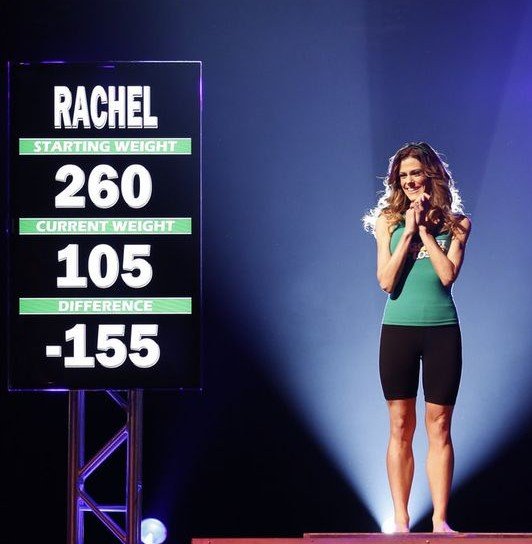
A day after Rachel Fredrickson won the latest season of "The Biggest Loser," after shedding nearly 60 percent of her body weight, attention wasn't focused on her $250,000 win — but rather the criticism surrounding her loss. 
Experts cautioned that regardless of her current weight, the criticism being levied on social media about her losing too much isn't helpful. A more constructive message is needed, they say, centering on body image and healthy living. 
The 5-foot-4, 24-year-old Frederickson dropped from 260 pounds to 105 under the show's rigorous exercise and diet regimen — but also time spent on her own before the finale. She was a three-time state champion swimmer at Stillwater Area High School in Minnesota, and said she turned to sweets for solace after a failed romance and gained the weight over several years. 
Frederickson's newly thin frame lit up Twitter on Wednesday, with many viewers pointing to the surprised expressions on the faces of trainers Jillian Michaels and Bob Harper during the show's Tuesday night finale. Many tweeted that Fredrickson looked anorexic and unhealthy, while others congratulated her for dropping 155 pounds.
Reference: Social Media Erupts Over 'Biggest Loser' Weight Loss.

Somebody may be the lightning rod, but social media is the forum in which we react openly.

Monday, February 3, 2014

How you say what you say matters in social media


(image credit)
If you plan to use all caps: My advice is to make sure you have the stuff to back it up. All caps on the Internet will always be considered shouting, so shout smart if you are going to shout. DiGiorno on Twitter was widely praised for this: @DiGiornoPizza: YO, THIS GAME IS LIKE A DIGIORNO PIZZA BECAUSE IT WAS DONE AFTER TWENTY MINUTES #SuperBowI #SuperSmack #DiGiorNOYOUDIDNT 
Here's my question to anyone considering such a treatment: Did the all caps do anything other than make people talk about and wonder why DiGiorno needed to use all caps? I don't think so. I think the message is completely lost and the all caps becomes the feature. That may work for you, but then again it may not.
Reference: Social media lessons from the Super Bowl.

How you tweet (e.g., with caps) matters as much as what you tweet (i.e., your message).

Wednesday, January 29, 2014

Scarlett Johansson beautifies SodaStream


Just a mediocre actress at best, Scarlett Johansson has such uncommonly classic beauty, and she wins the day for SodaStream.  There is politicking behind the scenes, and the controversy has led, or may lead, to a ban on her ad.  You can Google this story, if you'd like.  But in the meantime just enjoy gazing at this lady's face.

Monday, January 27, 2014

Anna Kendrick does Newcastle Brown Ale


Even when it's a rough take, it's not quite so rough.  Especially when you have Anna Kendrick on set.  Who's pretty funny.  And pretty (period).  It's all fitting promo for Newcastle Brown Ale.  

Friday, January 24, 2014

Creepy-awesome promo video for `Devil's Due


This is creepy-awesome prank-cum-promotion for the film `Devil's Due.


This may be an emerging trend among film promotions (rf. `Carrie, which I wrote about Awesome prank is also a promotional).  

I believe, moreover, that it's a sign of the times that the promo video went gangbusters viral (36,141, 682 views), whereas the trailer itself was just modestly viral (624,890), as of this writing.  

Wednesday, January 22, 2014

From 4Ps to 4Es of social media marketing


(image credit)

From
  • Product
  • Place
  • Price
  • Promotion
To
  • Experience
  • Everywhere
  • Exchange
  • Evangelism

Chris Anderson, author of The Long Tail, writes about the e-democratization of producing, distributing and accessing content.  It's a world populated by intangible stuff, which is experienced, instead.  Social media, and the internet in general, are the platform on which that stuff can be put out and gotten to everywhere, anytime.  

I suppose the exchange is about sampling something, or even fully experiencing something, for free (that is the value).  With the agreement, in turn, that you as the recipient of that value can be advertised to (that is the cost, which is exchanged).  

Once you have volumes of such experiences and exchanges, anywhere and anytime, then evangelism speaks to what happens, I believe, when your stuff takes root online and goes viral.  Which is easier said than done, but obviously it can happen.